|
|
THE RAILWAY AND VIADUCT
Work began on the South Devon Railway in 1844 and
opened in May 1846. Brunel persuaded the Company to adopt the
Atmospheric System, which provided traction for the trains with a vacuum
tube to draw them along. Pumping Stations were built at 3 mile intervals
to create the vacuum in each section. The system was ready in late 1847
but
was plagued with problems until it wa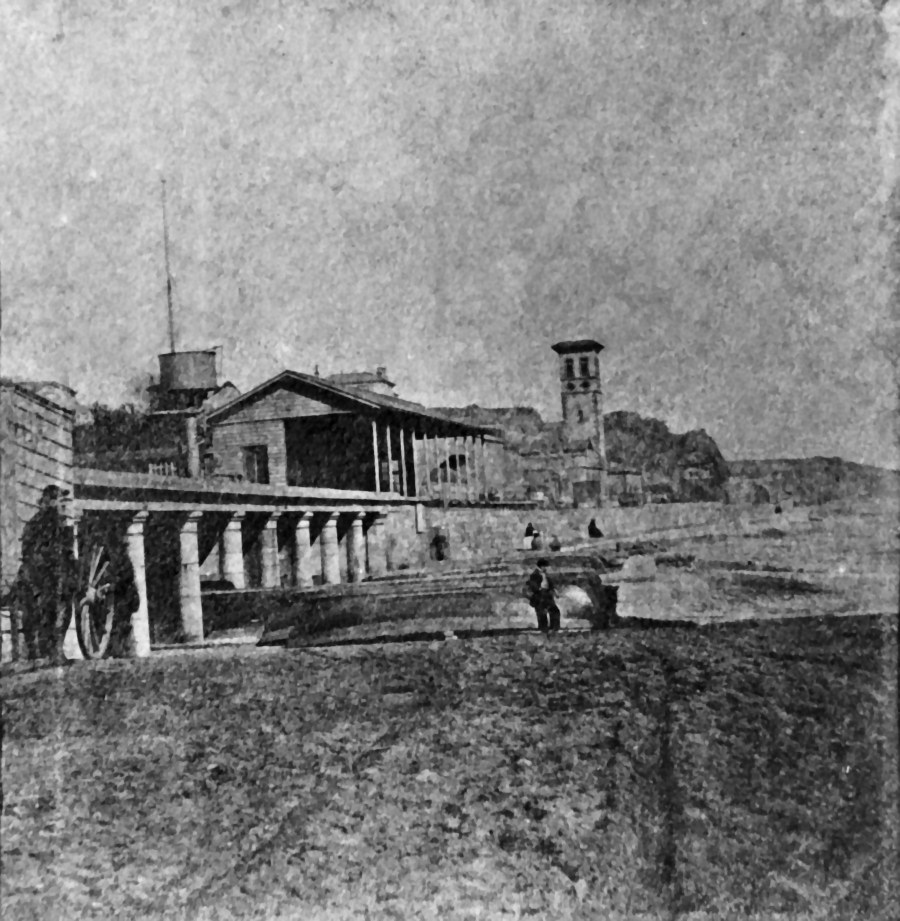 s abandoned a year later and was
never used beyond Newton Abbot. s abandoned a year later and was
never used beyond Newton Abbot.
The line was initially Broad Gauge and single track from Dawlish to
Teignmouth.
By 1880, broad gauge track was being replaced with standard gauge but
SDR did not update their line until May 1892. A third rail was installed
along many sections and, over the weekend of 20th May, the work was
completed. Many thousand came to watch the work in progress and the
gangs welcomed the overtime payments of 25% extra plus 1 shilling a
night allowance.
Track through the tunnels remained single track until 1905 when the
tunnels were widened to accommodate a second track.
Brunel’s viaduct of 1845 had eight stone columns, which restricted the
view of the sea, so when, in 1928, plans were put forward to replace it
with a steel structure, the local council asked for a new design to open
up the view underneath, which is what we have today. The stonework of
the old viaduct was strewn over the rocks between Dawlish Warren and
Langstone Rock.
Prior to the coming of the railway, the coastline was very irregular and
served to break up the tidal action but the sea wall provided a long and
continuous run for heavy seas, causing increased scouring of the beach
in spite of the several groynes built by the railway authorities. It has
been claimed that the beach at Dawlish has been eroded to an average
depth of 10 or 12 feet since 1840.
|
|